What Lingers at the Margin: Japanese Cinema's Mastery of the Unseen Corner
There is a particular discipline required of the American viewer who approaches Japanese cinema for the first time—not the discipline of reading subtitles, nor even of adjusting to slower pacing, but something more fundamentally perceptual. It is the discipline of learning to look sideways.
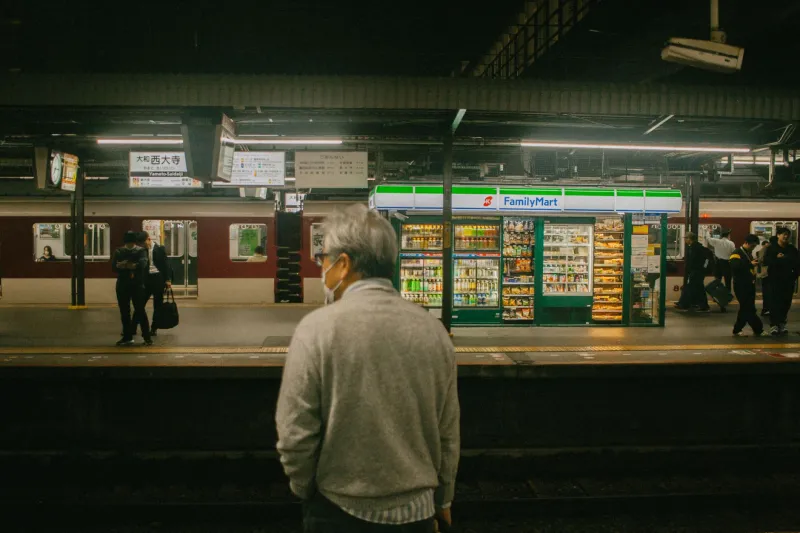
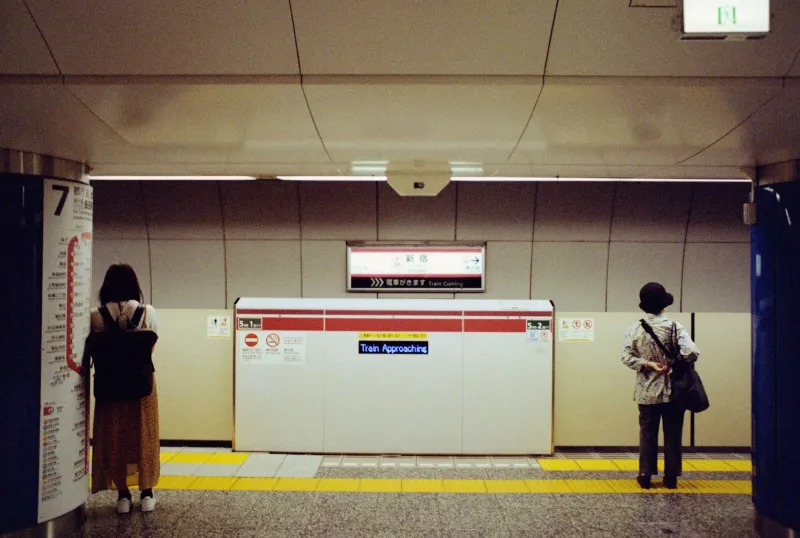
Where mainstream Hollywood filmmaking operates on a principle of directed attention—guiding the eye toward the most narratively significant element in any given shot—Japanese cinema has cultivated an opposing philosophy. The camera does not always point you toward what matters. Sometimes it simply holds a frame and trusts that you will eventually notice the figure standing quietly in the far corner, the object resting at the bottom edge of the screen, the gesture that occurs just as your eye is drawn elsewhere. This is not carelessness. It is one of the most sophisticated storytelling techniques in the history of the medium.
The Grammar of Off-Screen Space
In classical Japanese aesthetics, the concept of ma—a term encompassing meaningful pause, interval, and negative space—has long shaped how artists structure experience. Painters leave portions of the canvas deliberately bare. Architects design rooms around the quality of absence as much as presence. It should surprise no one that Japanese cinema inherited this sensibility and applied it to the spatial logic of the film frame.
Off-screen space, in the Western tradition, tends to function as a kind of narrative holding area—characters exit and enter from it, sounds emanate from it, but its primary purpose is to suggest a world beyond the visible. In Japanese cinema, off-screen space is an active dramatic participant. Directors like Yasujirō Ozu, Hirokazu Kore-eda, and Ryūsuke Hamaguchi treat the space just beyond the frame's boundary as a place where meaning accumulates, where emotional weight gathers before eventually pressing into the visible image—or sometimes never pressing in at all.
Kore-eda's Shoplifters, which reached American art-house audiences to considerable acclaim, provides one of the more instructive examples. In a film ostensibly about a makeshift family navigating poverty in contemporary Tokyo, some of the most devastating emotional information arrives not through dialogue or close-up reaction shots, but through objects and figures glimpsed briefly at the frame's periphery—a child's shoe near the edge of a shot, an elderly woman's hand just barely entering the composition before the cut. These elements do not announce their significance. They require the viewer to have been paying a particular kind of attention, the sort of attention that most multiplex cinema actively trains us out of.
The Reward of Patient Looking
Hamaguchi's Drive My Car, which won the Academy Award for Best International Feature Film in 2022 and introduced many American viewers to his work, offers a sustained masterclass in peripheral storytelling. The film's extended takes—some running well beyond what conventional narrative editing would permit—create conditions in which the eye must eventually wander. And it is precisely in that wandering that certain revelations occur.
In one of the film's most quietly shattering sequences, the protagonist sits in the back seat of his red Saab while his driver navigates through Hiroshima. The conversation occupies the foreground of our attention, but Hamaguchi composes the shot so that the city passing beyond the car window carries equal weight. A pedestrian crossing, a construction site, a cluster of schoolchildren—none of these elements are narratively essential in the conventional sense, yet their accumulation produces an emotional texture that the dialogue alone could not generate. The story is happening at the center of the frame, yes, but it is also happening everywhere else simultaneously.
This technique asks something unusual of American audiences: it asks them to hold multiple focal points in mind at once, to resist the trained impulse to lock onto whatever the editing or camera movement suggests is most important. For viewers accustomed to the rhythm of Hollywood cutting—which averages somewhere between two and four seconds per shot in contemporary action cinema—this can initially feel disorienting. With patience, it begins to feel like freedom.
Edges as Emotional Architecture
The use of frame edges as deliberate compositional tools extends beyond mere visual interest. Japanese directors frequently position characters at the extreme margins of their shots not to suggest their unimportance, but to encode their emotional relationship to the scene's center of gravity. A character pushed to the very edge of the frame is not simply occupying empty space—they are, in the visual language these filmmakers have developed, expressing isolation, exclusion, or a kind of watchful remove that dialogue might render too explicit.
Ozu's late films, particularly Tokyo Story and Late Spring, established many of the conventions that later directors would inherit and expand. His famous low camera angle—often described in terms of the perspective it creates—also functions as a mechanism for peripheral inclusion. By placing the camera close to the floor, Ozu brings the edges of domestic interiors into the frame: the hem of a garment, the base of a teapot, the lower half of a doorframe. These details accumulate into a portrait of daily life that is dense with implication precisely because so much of it was never meant to be noticed.
Training a New Kind of Attention
For American viewers and film enthusiasts, engaging with this tradition represents an opportunity that extends beyond aesthetic appreciation. It is, in a genuine sense, a form of perceptual retraining—an invitation to question the assumptions about where meaning lives that decades of Hollywood viewing have quietly installed.
This does not require abandoning the pleasures of more conventionally directed cinema. It requires, rather, adding a new register of attention to one's viewing practice. The capacity to notice the figure at the edge of the frame, the object resting at the bottom of the composition, the sound that arrives from off-screen without ever finding a visible source—these skills, once developed, do not stay confined to the theater. They begin to reshape how one moves through the world.
There is something quietly radical about a cinema that refuses to tell you exactly where to look. In an era of algorithmic content designed to maximize engagement through relentless stimulation, Japanese filmmaking's commitment to the peripheral represents a different set of values entirely—values rooted in trust, in patience, and in the conviction that what we almost miss often turns out to matter most.
The margin, it turns out, was never empty. We simply had to learn how to look.