In Transit, In Truth: How Japanese Directors Transform the Journey Into the Story
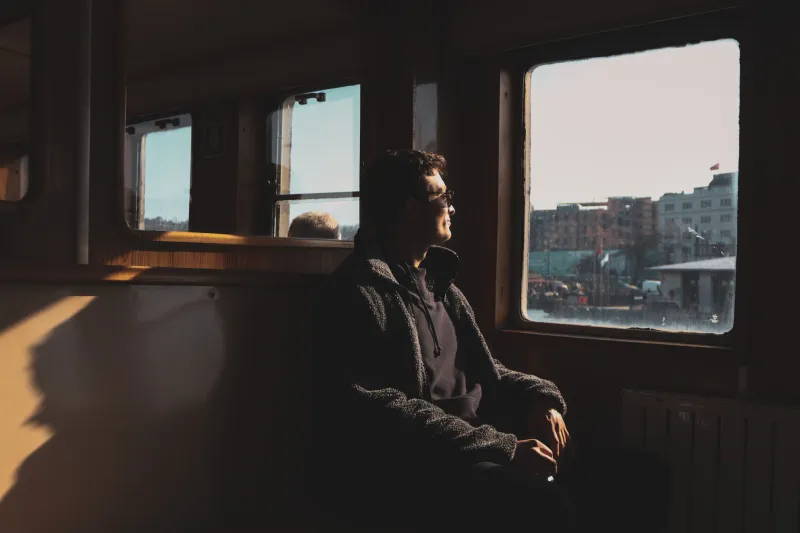
There is a particular quality of stillness that descends upon a person seated in a moving train. The world outside blurs into abstraction. Social obligations dissolve. The usual armor of routine—the practiced smile, the measured word—becomes suddenly optional. Japanese filmmakers have recognized this condition for decades, and they have built some of their most quietly devastating work around it.
Where American cinema tends to treat travel as connective tissue between plot points, Japanese directors approach transit as a dramatic environment in its own right. The train car is not a vehicle that moves characters from one scene to the next. It is a pressure chamber. A confessional. A mirror that reflects precisely what its occupants would prefer not to see.
The Architecture of Constraint
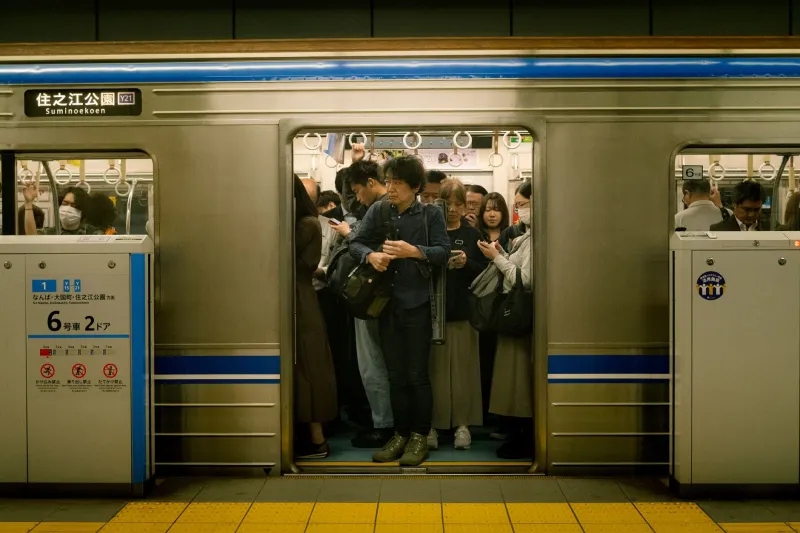
To understand why transit functions so powerfully in Japanese cinema, it helps to consider what transit physically does to a person. You are seated—or standing, gripping a strap—in a space you did not choose, beside people you did not select, for a duration you cannot meaningfully control. In a culture that places enormous weight on social performance and contextual propriety, this arrangement is quietly radical.
Japanese directors exploit this architecture with considerable precision. The confined dimensions of a train car eliminate the possibility of dramatic exit. Characters cannot storm out of a conversation or retreat to another room. They must remain, and in remaining, they must reckon. The camera, too, is constrained: it cannot pull back to a wide establishing shot without breaking the claustrophobic logic of the space. Cinematographers working within transit settings are forced into close-ups, over-the-shoulder compositions, and reflections in rain-streaked windows—visual strategies that press the audience uncomfortably close to their subjects.
This is not accidental. It is, in the most precise sense of the word, directorial.
What the Window Reflects
One of the defining techniques of transit cinema in Japan is the use of the window as a psychological surface. A character staring out at passing landscape is not simply a character looking at scenery. The window becomes a screen upon which internal states are projected—grief, longing, a decision not yet made—while the exterior world moves indifferently past.
This technique works because it externalizes interiority without requiring explanation. An American filmmaker might cut to a flashback, or allow a character to articulate their emotional state in conversation. Japanese directors more frequently trust the image itself: the face, the glass, the smeared light of a passing station. The audience is invited to do interpretive work, to bring their own emotional vocabulary to what they observe. The result is a form of intimacy that feels earned rather than delivered.
The approach also speaks to something culturally specific. In Japanese social life, direct emotional expression carries significant weight and risk. Feelings are often communicated obliquely—through gesture, timing, the deliberate withholding of speech. Transit scenes in Japanese cinema replicate this dynamic. What a character does not say on a train is frequently more revealing than anything they might say elsewhere.
Time Pressure as Dramatic Engine
Beyond the spatial constraints of transit, Japanese directors also leverage time as a structural force. Every train journey has a terminus. Every bus ride has a final stop. This built-in countdown creates a form of dramatic pressure that requires no artificial manipulation: the audience understands, intuitively, that whatever must happen between these characters must happen before the doors open.
This temporal urgency can operate at the scale of an entire film or compress into a single, shattering sequence. Consider how a journey of twenty minutes becomes, in the right hands, a complete emotional arc—tension accumulating as stations pass, resolution or its absence arriving precisely when the brakes engage. The screenplay does not need to manufacture a ticking clock. The transit system provides one.
For American audiences accustomed to films that announce their dramatic stakes through music, camera movement, and explicit dialogue, this restraint can initially feel disorienting. There is no swelling score to signal that something important is occurring. The importance must be perceived, not announced. This is, for many viewers, an acquired skill—and Japanese transit cinema is among the most effective teachers.
The Bus Route as Biography
While the train dominates discussions of Japanese transit cinema, the bus deserves its own consideration. Where trains follow fixed, high-speed corridors, buses move through neighborhoods, stopping at corners, adjusting to traffic. This slower, more meandering rhythm suits a different kind of storytelling—one concerned less with arrival than with the texture of ordinary life.
Bus sequences in Japanese films frequently serve as biographical instruments. A character's relationship to their route—the stops they anticipate, the passengers they recognize, the window view they have memorized—communicates a life's geography without a single line of exposition. Directors use these sequences to establish how thoroughly a character has been shaped by their environment, and, in moments of transition, how profoundly that environment is about to change.
When a character boards a bus they have ridden a thousand times and finds themselves unable to look out the window as they always have, the rupture requires no explanation. The audience feels it.
Station Corridors and the Space Between Decisions
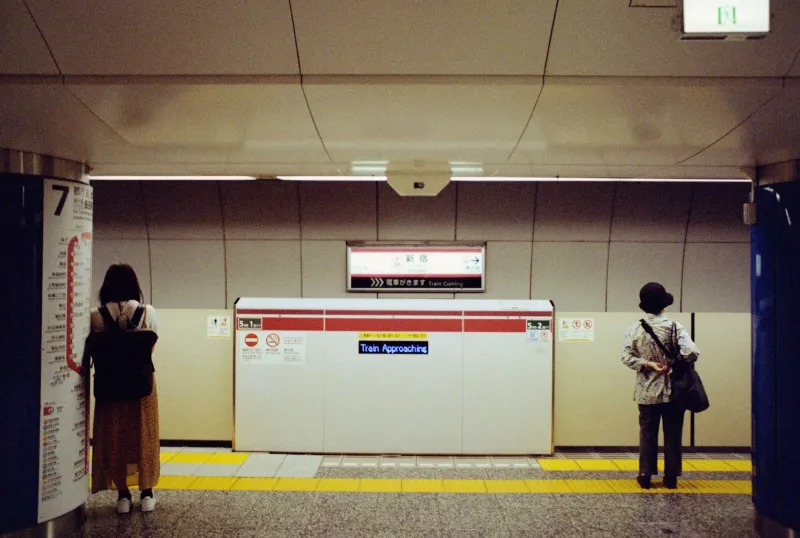
Perhaps the most underexamined transit environment in Japanese cinema is the station corridor—the underground passages, the crowded concourses, the staircases that connect platforms to street level. These are threshold spaces, neither inside nor outside, neither origin nor destination. Japanese directors treat them as zones of suspended judgment, where characters exist briefly outside the social roles that define them everywhere else.
A character moving through a station corridor is in motion but not yet arrived. They have not yet become whoever they will be at their destination. This liminal quality makes corridors ideal settings for moments of private crisis—a sudden pause in the crowd, a phone call declined, a direction reversed. The decision to turn around in a station corridor, to miss a train deliberately, carries a narrative weight disproportionate to its physical scale. It is a small act with enormous implications, and Japanese cinema understands this with an exactness that continues to reward close attention.
An Invitation to Slower Looking
For American audiences approaching Japanese transit cinema for the first time, the invitation is essentially this: resist the impulse to wait for something to happen, and instead attend to what is already happening. The woman gripping the overhead strap with both hands when only one is necessary. The man who opens his phone and then does not look at it. The teenager who chooses the seat farthest from the window on a day when the view would be beautiful.
Japanese directors working in this tradition are not withholding story. They are offering a different understanding of where story lives—not in confrontation or declaration, but in the accumulated weight of small, precise, human moments. Transit, with its enforced proximity and unavoidable duration, is simply the environment in which those moments surface most honestly.
The train, after all, does not care who you are trying to be. It only carries you toward where you are going.