The Platform as Threshold: How Tokyo's Subway Stations Became Japanese Cinema's Most Powerful Dramatic Stage
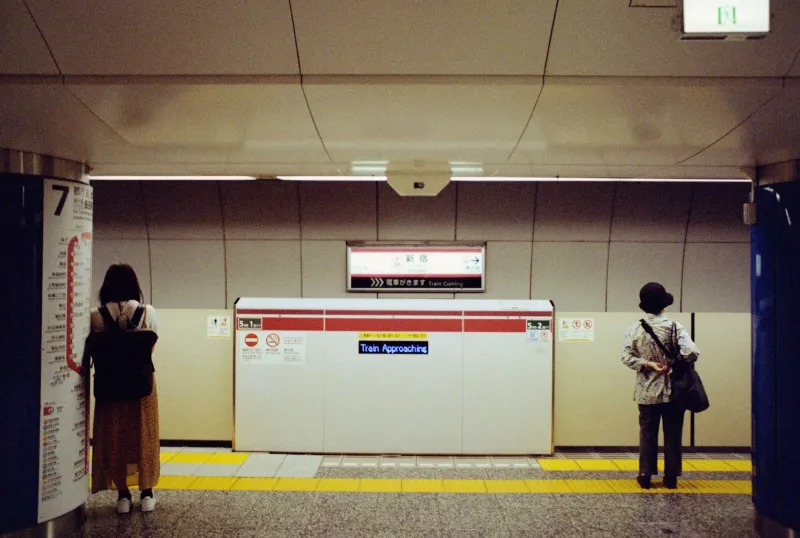
There is a particular quality of time that exists only on a train platform. It is not quite the present—you have already left wherever you came from—and it is not yet the future, which waits somewhere down the line. It is, in the most precise sense, a threshold: a place between identities, between choices, between versions of yourself. Japanese cinema has understood this geography for decades. And increasingly, American audiences are beginning to understand it too.
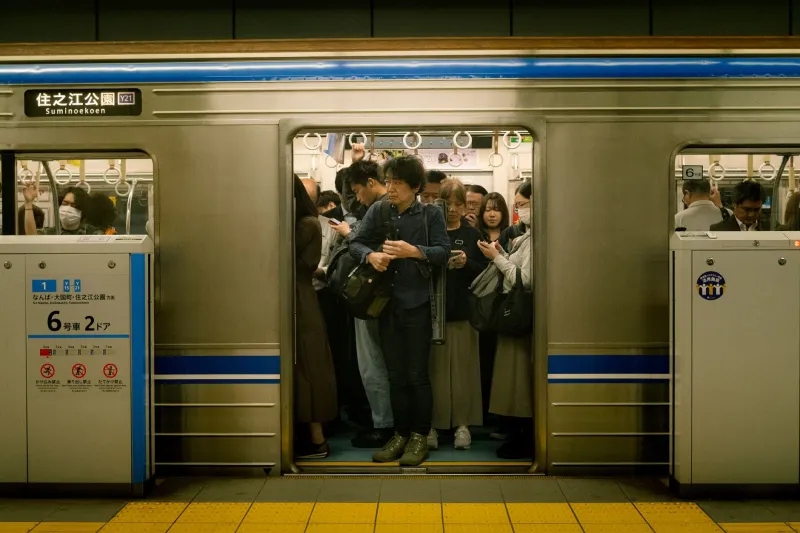
The Tokyo Metro alone serves approximately eight million passengers daily, making it one of the densest human crossroads on the planet. Yet the subway station's cinematic power does not derive from its scale. It derives from what that scale conceals: the radical privacy of the individual suspended inside an enormous crowd, momentarily freed from the obligations of role and routine, briefly accountable to no one.
This is the dramatic premise that Japanese directors have returned to with remarkable consistency, and with remarkable sophistication.
Waiting as Dramatic Action
American filmmaking has historically treated waiting as an absence of plot—a condition to be escaped rather than inhabited. Characters in Hollywood films pace, check their phones, drum their fingers. The camera grows impatient alongside them. Waiting, in this tradition, is negative space: the gap between things that matter.
Japanese cinema proposes something entirely different. In films ranging from Hirokazu Kore-eda's delicate domestic studies to Shunji Iwai's lyrical explorations of youth and longing, the act of waiting is itself the dramatic event. The platform does not merely frame the story; it generates it. Characters who stand still on a train platform in Japanese film are not pausing the narrative—they are living inside its most concentrated moment.
This distinction carries real philosophical weight. The platform, in Japanese cinematic grammar, is where a person's internal life becomes briefly visible, stripped of the social performance that office corridors and dining tables demand. A salaryman who has just received devastating professional news boards a train in one of Kore-eda's films and says almost nothing. But the camera holds on his face as the platform slides away, and in that stillness, an entire biography becomes legible. The audience does not need dialogue. The threshold has done the work.
Liminal Architecture and the Geography of Ambition
The word liminal derives from the Latin limen, meaning threshold or boundary. Anthropologists use it to describe transitional states—rituals, rites of passage, the suspended moment between one social identity and another. Tokyo's subway stations are, architecturally and emotionally, among the most intensely liminal spaces in the modern world.
Japanese directors have been extraordinarily attentive to this quality. The fluorescent lighting of an underground platform—cold, democratic, slightly merciless—strips characters of flattering context. Everyone beneath it is simply a person, waiting. The visual grammar of these spaces in Japanese film tends toward an almost clinical precision: long takes, restrained camera movement, compositions that place the human figure inside a geometry of tile and steel that dwarfs yet somehow also isolates.
This visual language speaks directly to questions of ambition and belonging that resonate well beyond Japan's borders. A young woman standing on a Shinjuku platform, briefcase in hand, deciding whether to board the train that will carry her to an interview for a job she is not sure she wants—this is not a specifically Japanese moment. It is a specifically human one. American audiences who have stood at their own metaphorical crossroads, weighing security against desire, recognize the architecture immediately, even if they have never been to Tokyo.
Unexpected Encounters and the Ethics of Attention
Beyond individual moments of self-reckoning, Japanese platform cinema excels at staging the unexpected encounter—the chance meeting that reshapes a life precisely because it occurs outside the structured social spaces where such meetings are supposed to happen.
The platform, because it belongs to everyone and no one, creates a peculiar social permission. Two strangers who would never speak in an office or a restaurant may find themselves, on a platform at midnight, exchanging the kind of honesty that ordinary social life prohibits. Japanese films exploit this permission with extraordinary care. These encounters are rarely dramatic in the Hollywood sense—no one confesses a crime or professes undying love. Instead, a few sentences are exchanged. A small kindness is extended. A piece of information, offered almost accidentally, redirects the trajectory of a character's entire subsequent life.
This narrative modesty is itself a form of argument. These films suggest that the most consequential moments of a life are rarely announced as such. They arrive quietly, in underground corridors, between two people who will likely never meet again, and they leave no obvious mark—until, much later, everything looks different because of them.
Why American Audiences Are Paying Attention
The growing appetite among American viewers for Japanese platform cinema is not, at its core, about aesthetic novelty. It is about permission.
Hollywood's dominant narrative grammar tends to insist that ambition must be spectacular, that belonging must be hard-won and loudly celebrated, that uncertainty is a problem requiring immediate solution. The emotional contract of the mainstream American film is fundamentally optimistic in a particular way: struggle is validated only when it produces visible triumph.
Japanese platform cinema offers a different contract. It says, with great formal elegance, that uncertainty is not a malfunction. That standing on a platform and not knowing which train to board—metaphorically or literally—is not a failure of character. It is the condition of being alive and paying attention. The camera does not punish characters for their ambivalence. It watches them with something closer to respect.
For American audiences who have spent years feeling quietly ashamed of their own hesitations, this is a genuinely radical proposition. The platform, in these films, does not demand that you have already decided who you are. It simply asks that you show up and wait, honestly, for whatever arrives next.
The Station as Social Contract
There is one final dimension of Tokyo's subway stations that Japanese cinema captures with particular acuity: their function as spaces of involuntary community. On a Tokyo platform, you stand inches from strangers whose inner lives are entirely opaque to you, governed by the same unspoken codes of conduct, subject to the same delays and redirections. You are, briefly, equal.
This enforced proximity—civil, impersonal, yet oddly intimate—is a recurring subject in Japanese platform films. The social contract of the station, in which thousands of individuals agree, without negotiation, to share a confined space with minimal friction, becomes a kind of compressed image of civic life itself. Directors working in this mode often use the platform crowd not as background texture but as moral context: a reminder that the individual drama unfolding in the foreground exists inside a web of other dramas, equally real, equally weighted, equally deserving of attention.
For American viewers accustomed to a cinema that places the individual at the unquestioned center of the frame, this is a quietly corrective experience. The platform does not belong to the protagonist. It belongs to everyone. And in that belonging, something genuinely moving becomes possible.
The trains will keep running. The platforms will keep filling and emptying, filling and emptying, in that ancient rhythm of departure and arrival that Japanese cinema has made its own. What these films understand—and what they are teaching global audiences, one quiet threshold at a time—is that the most important journeys do not always require movement. Sometimes, they begin and end on a platform, in the space between one version of a life and another, while the next train approaches in the dark.