Doing More With Less: The Quiet Power of Japanese Cinema's Economical Storytelling
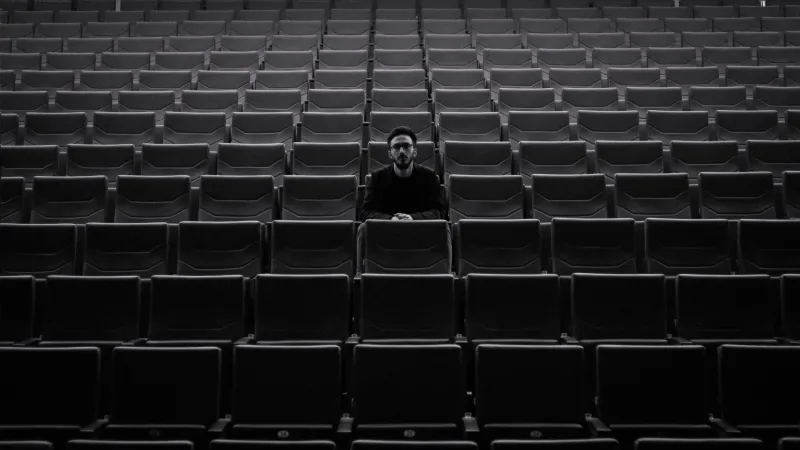
There is a particular kind of frustration that American audiences sometimes carry out of a Japanese film—not the frustration of disappointment, but the more unsettling kind that arrives when a story has ended before you felt ready for it to end. No tidy resolution. No explanatory monologue. No final scene designed to confirm that you understood the point. Just credits, and a strange, lingering weight that follows you into the parking lot and, sometimes, into the following week.
That weight is not accidental. It is, in fact, the entire goal.
Japanese cinema has cultivated an aesthetic philosophy of restraint that operates in direct contrast to the maximalist impulses of mainstream Hollywood production. Where American studios frequently equate length with seriousness and exposition with clarity, Japanese directors have long operated on a different premise: that narrative economy—the disciplined removal of everything unnecessary—produces not a thinner story, but a richer one.
The Architecture of Omission
To understand how Japanese filmmakers achieve this effect, it helps to consider what they choose to leave out. In a conventional Hollywood drama, a character's emotional transformation is typically charted through a series of explicit scenes: the inciting wound, the moment of denial, the confrontation, the breakthrough, and the earned resolution. Each stage is labeled, more or less, for the audience's convenience.
Japanese cinema tends to trust its viewers to perform more of that connective work themselves. A director like Hirokazu Kore-eda, whose films have earned significant critical attention in the United States, routinely omits scenes that a Western screenwriting manual would classify as essential. In Still Walking (2008), a family gathers to mark the anniversary of a son's death, and the grief at the center of the story is never directly addressed by any character. It surfaces instead through offhand comments, deliberate silences, and the quiet cruelty of small domestic rituals. American audiences accustomed to cathartic confrontation may find themselves disoriented—and then, gradually, devastated.
This is the alchemy the title of this piece gestures toward: the transformation of absence into presence, of silence into statement.
Runtime as Argument
The average runtime of a major Hollywood studio release has crept steadily upward over the past two decades, with many prestige productions now exceeding two and a half hours. The implicit argument embedded in that length is one of ambition—as though a film must be large to be significant.
Japanese cinema largely rejects this equation. Many of the most critically admired Japanese films of the past thirty years run between ninety minutes and two hours, and their brevity is not a concession to commercial pressure but a formal choice. A shorter runtime demands that every scene carry more weight. It eliminates the buffer zones where Hollywood films often coast—the redundant dialogue scenes, the establishing sequences that explain what the previous scene already showed, the subplots that exist primarily to fill time between set pieces.
When a Japanese film gives a scene to a particular moment—say, a middle-aged woman watching her adult child leave the house for the last time—the audience understands, almost instinctively, that this moment has been chosen over many others. The selection itself communicates meaning. The scene does not need to announce its own importance.
What Critics Are Saying
American film critics who cover Japanese cinema with regularity have increasingly articulated this dynamic in their writing. The critical conversation around Japanese film in US publications has shifted over the past decade from treating restraint as an acquired taste—something that requires cultural translation—to recognizing it as a genuinely distinct and sophisticated narrative technology.
The director Ryusuke Hamaguchi, whose film Drive My Car won the Academy Award for Best International Feature Film in 2022, became something of a flashpoint for this discussion. At nearly three hours, Drive My Car is not a short film—but its length is structured around deliberate negative space rather than accumulation. Long stretches of the film involve characters riding in a car, speaking in measured, unhurried sentences about things that are adjacent to but not quite the same as what they actually feel. American reviewers who might have expected such scenes to drag instead reported finding them hypnotic. The restraint, paradoxically, created a kind of intimacy that faster, more explicit films rarely achieve.
The Viewer as Collaborator
At the core of this filmmaking philosophy is a particular theory of the audience. Japanese directors working in the tradition of restraint tend to treat viewers not as passive recipients of a completed narrative experience but as active participants whose imagination and emotional intelligence are necessary to complete the work.
This stands in meaningful contrast to the dominant Hollywood model, which has grown increasingly anxious about viewer confusion and increasingly committed to pre-empting it. The rise of franchise filmmaking, with its elaborate mythology and extensive expository dialogue, reflects a production culture that fears leaving anything ambiguous. The fear is commercially understandable—global audiences must be served, and cultural specificity can be a box-office liability.
But something is lost in that transaction. When a film explains itself fully, it also closes itself. There is nowhere left for the viewer's imagination to enter, no gap through which personal experience can flow into the story and make it feel, in some private way, one's own.
Japanese cinema, by contrast, tends to remain open. The unanswered question at the end of a Kore-eda film, the ambiguous glance in a Naomi Kawase scene, the conversation that stops just before the most important thing is said in a Hamaguchi screenplay—these are not failures of narrative completeness. They are invitations.
Why American Audiences Are Responding Now
The growing American appetite for Japanese cinema's brand of restraint is not occurring in a vacuum. It reflects, at least in part, a broader fatigue with the maximalist entertainment culture that has dominated US screens for the better part of two decades. Audiences who have spent years consuming franchise films with escalating stakes and increasingly elaborate plotting are, by many accounts, hungry for something that asks a different kind of attention from them.
Streaming platforms have played a complicated role in this shift. On one hand, they have made Japanese films more accessible to American viewers than ever before. On the other, the endless-scroll environment of streaming is in many ways antithetical to the contemplative viewing mode that Japanese cinema rewards. The films that have broken through most decisively in the US market have tended to do so through theatrical releases and film festival exposure—contexts that encourage the sustained, undistracted attention that economical storytelling requires.
There is something appropriate about that. A film built on restraint deserves an audience willing to practice a little restraint of its own—to sit still, to resist the urge to check a phone, to allow a silence to remain silent long enough to discover what it contains.
The Lesson in the Gap
What Japanese cinema ultimately teaches, for those willing to receive the lesson, is that the space between moments is itself a kind of content. The pause after a difficult line of dialogue. The cut that skips over the scene you expected to see. The ending that declines to confirm what you hoped or feared would happen.
These gaps are not empty. They are where the film continues to live after the projector goes dark—in the viewer's memory, imagination, and private emotional history. That is not a smaller story. That is, if anything, the largest story a film can tell.