Seen and Unseen: How Japanese Ensemble Cinema Discovers Intimacy Inside the Crowd
American cinema has always had a particular affection for the solitary figure. Whether it is the gunslinger walking into the sunset, the detective piecing together a case in a rain-soaked apartment, or the entrepreneur betting everything on a single idea, Hollywood's grammar is largely built around one protagonist whose internal journey organizes the entire film. It is a powerful structure, and it has produced genuinely great work. But it is also, in a fundamental sense, a structure that treats the crowd as scenery.
Japanese cinema takes a different view of the crowd entirely.
The Architecture of Overlapping Lives
In films such as Hirokazu Kore-eda's Shoplifters and Ryusuke Hamaguchi's Wheel of Fortune and Fantasy, the narrative does not orbit a single consciousness. Instead, it distributes itself across multiple characters whose lives intersect, graze one another, and sometimes collide without either party fully understanding what has happened. The result is something architecturally different from the protagonist-driven model — less like a tower and more like a city block, where every window conceals a complete interior world.
This approach is not simply a stylistic preference. It reflects a cultural understanding of selfhood that differs meaningfully from the individualist assumptions embedded in most American storytelling. In Japanese society, identity is frequently understood in relational terms — who you are in relation to your family, your workplace, your neighborhood. To render that experience faithfully on screen, a filmmaker almost has to tell multiple stories simultaneously, because no single life makes sense without the lives pressing against it.
What makes this cinematically remarkable is that the ensemble format, in skilled hands, does not dilute emotional investment. It multiplies it.
Loneliness as a Shared Condition
There is a paradox at the heart of the best Japanese ensemble films: they are, quite consistently, stories about isolation. Characters in Shoplifters have constructed a makeshift family precisely because conventional society has rendered each of them invisible. In Yasujiro Ozu's Tokyo Story, elderly parents travel to visit their adult children in a city that has no real place for them — they are surrounded by people and utterly alone. In Satoshi Kon's animated masterwork Tokyo Godfathers, three homeless individuals stumble through a crowded metropolis during the holidays, each carrying a private grief that the city's festive noise cannot reach.
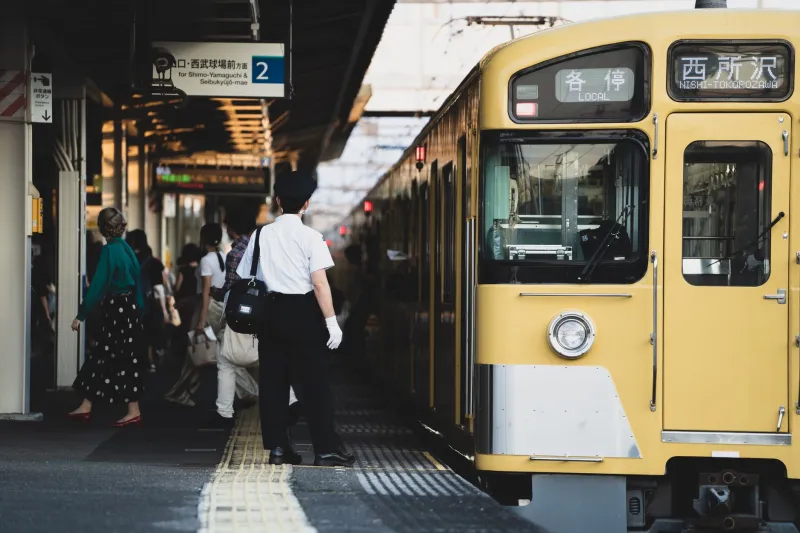
The insight these films share is that isolation is not a function of physical solitude. It is a function of being unwitnessed. You can vanish inside a commuter train packed with a thousand bodies. You can disappear at a dinner table surrounded by your own children. Japanese cinema understands this with particular clarity, perhaps because Japanese urban life — dense, structured, governed by elaborate social codes — creates so many opportunities for people to be present and invisible at the same time.
For American audiences accustomed to stories where the protagonist's interiority is always legible — voiced in narration, explained in dialogue, made explicit through close-up reaction shots — this can require a recalibration of attention. The emotional content in a Japanese ensemble film is often distributed across gestures, glances, and the spaces between words. You have to watch the whole frame, not just the face at its center.
Technique in Service of Multiplicity
Directors working in this tradition have developed specific tools for managing narrative multiplicity without losing the audience. Hamaguchi, in particular, has spoken about his use of extended rehearsal processes that allow actors to find the precise emotional register of a scene before the camera rolls — a method that produces performances of unusual naturalness, essential when no single character can carry the film alone.
Kore-eda frequently employs a documentary-adjacent observational style, allowing scenes to breathe past the point where a more plot-driven director might cut. A meal is not simply a vehicle for exposition; it is a self-contained event, with its own rhythms and silences, that tells you something specific about the people sharing it. This patience is not indulgence. It is the means by which minor characters accumulate weight until they feel as fully realized as the nominal leads.
The late Kon Ichikawa and Kenji Mizoguchi, working decades earlier, used deep-focus compositions and long takes to hold multiple characters in simultaneous dramatic tension within a single shot — a visual strategy that insists on the equal importance of every person in the frame. This is a fundamentally different message from the shallow-focus close-up that Hollywood perfected, which says, in effect: this face matters; everything else is background.
What American Cinema Can Learn — and Is Beginning To
It would be inaccurate to suggest that American filmmakers have never worked in the ensemble mode. Robert Altman built an entire career on overlapping narratives and democratized screen space. Paul Thomas Anderson's Magnolia is explicitly indebted to the Japanese tradition of interconnected lives. More recently, filmmakers such as Kelly Reichardt have developed a quieter, more observational approach to character that shares certain DNA with Kore-eda's methods.
But these remain exceptions within a system still largely organized around the marketable individual — the star, the hero, the franchise anchor. The ensemble, in Hollywood terms, usually means a group of individuals each competing for the most screen time, not a genuinely collective portrait of shared experience.
Japanese ensemble cinema offers something the American market increasingly seems to want, even if it cannot always name what it is looking for. The success of Shoplifters at the American box office, its Academy Award nomination for Best Foreign Language Film, and the sustained critical attention given to Hamaguchi's work following his Drive My Car Oscar win all suggest that US audiences are capable of meeting this kind of filmmaking on its own terms — of adjusting their attention, accepting ambiguity, and finding genuine emotional satisfaction in a story that refuses to tell them whose feelings matter most.
The Crowd as Protagonist
Perhaps the most radical proposition embedded in Japanese ensemble cinema is this: the crowd itself can be the protagonist. Not a representative individual standing in for a community, but the community as a living, breathing, internally contradictory entity whose collective experience constitutes the film's true subject.
This is a difficult idea to sell in a market organized around star power and individual narrative arcs. But it is also, arguably, one of the most honest things cinema can attempt — an acknowledgment that human life is not a solo performance but a permanent negotiation with everyone around us, most of whom we will never fully know, all of whom are carrying something.
To watch a Japanese ensemble film carefully is to be reminded of that fact. And in being reminded, to feel, paradoxically, a little less alone.