Empty Frames, Full Emotions: What Japanese Cinematography Teaches Us About the Power of Holding Back
There is a particular kind of exhaustion that sets in after watching a film constructed almost entirely from motion — cameras spinning, cutting, crashing through space at a pace that leaves no room for thought. American blockbuster cinema has refined this approach to something close to an art form in its own right, and yet a growing number of viewers are quietly stepping away from that tradition, seeking something that asks more of them rather than simply overwhelming them. Japanese cinema, with its centuries-deep aesthetic philosophy rooted in ma — the productive use of negative space and pause — has been offering exactly that alternative for decades. The question is why it has taken this long for mainstream American audiences to fully appreciate it.
The Philosophy Behind the Empty Frame
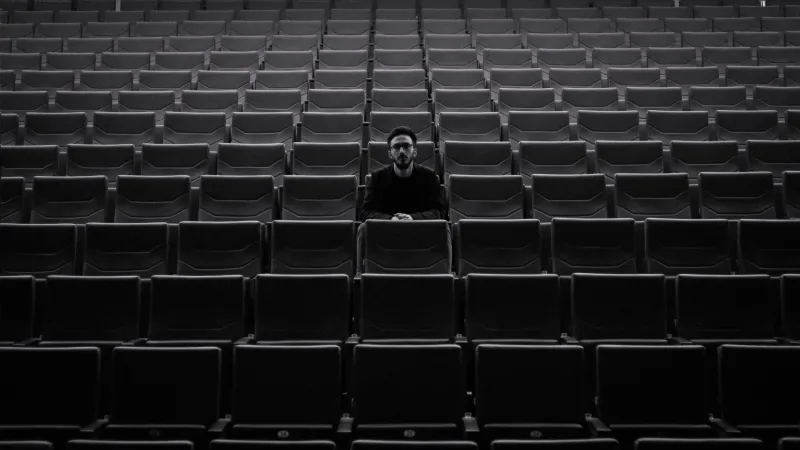
To understand what Japanese cinematography is doing differently, one must first understand what it is deliberately choosing not to do. Where Hollywood visual language tends to treat empty space as a problem to be solved — filled with movement, color, or action — Japanese directors and their cinematographers often treat emptiness as the primary expressive tool. The concept of ma, borrowed from traditional Japanese arts ranging from ikebana flower arrangement to Noh theater, holds that the space between things carries as much meaning as the things themselves.
This philosophy manifests on screen in ways that initially feel disorienting to viewers conditioned by Western cinematic norms. A character may sit in a room, and the camera will simply hold. No push-in to signal emotional significance. No swelling score to instruct the audience how to feel. The frame breathes. The viewer, denied the usual cues, is compelled to bring something of themselves to that silence. The emotional experience becomes collaborative rather than prescribed.
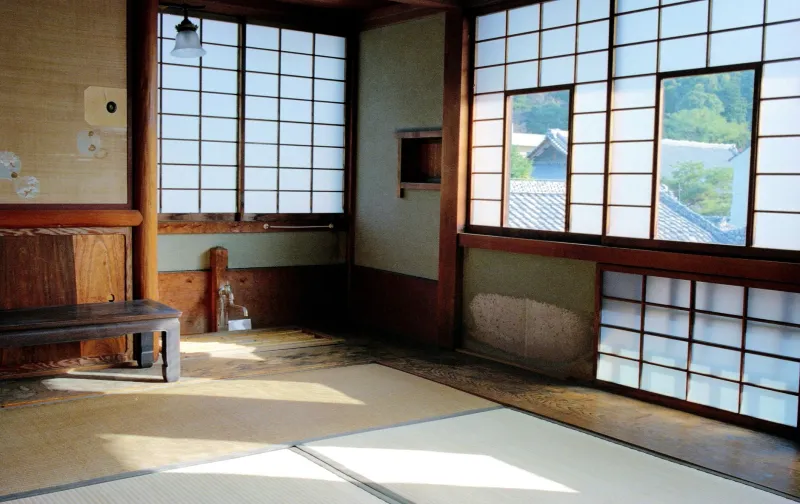
Akira Kurosawa, Yasujirō Ozu, and later directors such as Hirokazu Kore-eda and Ryūsuke Hamaguchi have each worked within this tradition while developing their own distinct visual languages. Ozu's famous low-angle, static camera — the so-called "tatami shot" — places the audience at the eye level of someone seated on the floor, creating an intimacy that is almost architectural in its precision. There is no flourish. The composition simply opens a window, and the viewer decides how long to look through it.
Negative Space as Emotional Architecture
Consider the visual construction of Kore-eda's Still Walking (2008), a film about a family gathering that is ostensibly about very little and is, in reality, about everything. The cinematographer Yutaka Yamazaki frames domestic interiors with a painter's attention to what lies outside the central action. A hallway glimpsed through a doorway. A garden existing quietly at the edge of a conversation. These peripheral spaces are never incidental; they form a kind of emotional infrastructure that supports the film's themes of loss, regret, and the passage of time without a single line of dialogue needing to carry that weight.
Hollywood's instinct in a comparable scene would almost certainly involve a close-up — a trembling lip, a tear forming, a significant glance — to ensure the audience registers the emotional stakes. Japanese cinematography frequently denies that shortcut. The trembling lip may exist, but the camera remains at a respectful distance, leaving the audience to close the gap themselves. The result is an emotional response that feels earned rather than engineered.
Lighting choices reinforce this philosophy. Rather than the sculpted, directional lighting that gives Hollywood drama its characteristic chiaroscuro drama, Japanese cinematographers often favor softer, more diffuse light sources that flatten rather than heighten. This is not a failure of technique but a deliberate aesthetic decision. Flat light does not editorialize. It does not tell you which face to watch or which shadow to fear. It simply illuminates, and in that neutrality, the audience's attention becomes their own responsibility.
Camera Movement as a Last Resort
Perhaps nowhere is the difference between Japanese and American cinematic grammar more pronounced than in the treatment of camera movement. The contemporary Hollywood camera is restless almost by default — tracking, craning, hovering on drones, executing complex choreography that announces its own technical achievement. There is genuine artistry in this tradition, but it comes with an implicit cost: the camera's movement becomes a form of interpretation, telling the audience where to look and how to feel about what they see.
Hamaguchi's Drive My Car (2021), which earned the Academy Award for Best International Feature Film and introduced his work to a vastly larger American audience, offers a striking demonstration of the alternative. The film is three hours long and contains perhaps fewer camera moves than a typical Hollywood action sequence lasting four minutes. When the camera does move — a slow, almost reluctant pan across a landscape, a gradual zoom that seems to hold its breath — the effect is seismic precisely because the gesture is so rare. The audience has been conditioned by the film's own restraint to register every deviation from stillness as meaningful.
This approach demands patience from viewers, and it is a demand that not everyone is willing to meet. But for those who do, the rewards are considerable. Movement becomes language rather than punctuation. The camera's stillness communicates as fluently as its motion.
Why American Audiences Are Responding Now
The timing of Japanese cinema's growing American reception is not incidental. We are living through a moment of genuine screen fatigue, a cultural condition diagnosed not by medical professionals but by the behavior of viewers who are turning away from spectacle-heavy franchises and seeking films that feel quieter, stranger, and more human. Streaming platforms have paradoxically contributed to this by making the breadth of world cinema more accessible than ever before, allowing American viewers to stumble across Ozu at midnight or discover Kore-eda on a Sunday afternoon without the friction of a theatrical expedition.
But accessibility alone does not explain the resonance. Something in the specific character of Japanese cinematographic restraint speaks to a fatigue that is fundamentally about being over-directed — about having every emotional response curated and delivered rather than discovered. The empty frame, the held shot, the light that does not editorialize: these techniques place the viewer back at the center of the experience, restoring a sense of agency that relentlessly stimulating cinema tends to remove.
A Different Kind of Demand
It would be a mistake to characterize Japanese cinematography as passive or unambitious. The restraint it practices is not the restraint of limitation but of discipline — the kind of discipline that recognizes how much can be communicated through what is withheld. A frame held three seconds longer than comfort requires is not an accident. It is a choice, and it is a choice that places a genuine creative demand on the audience.
American cinema has always been capable of this kind of demand. The long takes of Terrence Malick, the deliberate stillness in certain sequences from Kelly Reichardt's work, the architectural framing of Wes Anderson — these represent a native tradition of visual restraint that has never disappeared, even if it has rarely commanded the center of the industry. Japanese cinematography does not replace that tradition; it deepens and enriches it, offering a fully realized alternative grammar for viewers willing to learn a new visual language.
For those audiences, the empty frame is not empty at all. It is where the film actually lives.