Crowded and Invisible: How Japanese Cinema Diagnoses the Loneliness That American Culture Refuses to Name
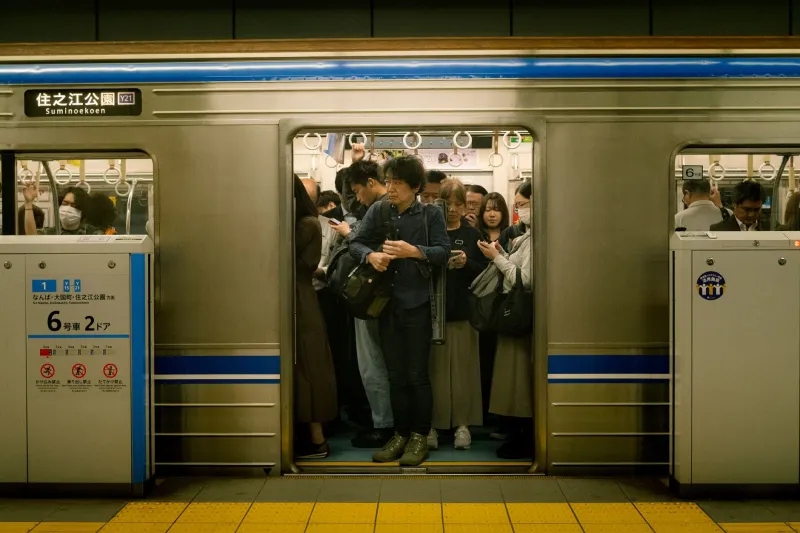
There is a particular kind of silence that exists inside a packed subway car. Not the absence of sound—the wheels grind, the announcements chime, the fabric of a hundred coats rustles in unison—but the silence between people who have collectively agreed not to see one another. Japanese cinema has spent decades studying this silence. American culture, by contrast, has spent those same decades trying to cure it with productivity apps and motivational content.
The result is a telling gap. While the United States grapples with what the Surgeon General formally declared a loneliness epidemic in 2023, Japanese filmmakers have already built an entire cinematic vocabulary around the condition—one that is more nuanced, more honest, and ultimately more useful than most of what the wellness industry has produced.
The Geometry of Urban Isolation
What separates Japanese cinema's treatment of loneliness from its Western counterparts is a fundamental difference in spatial logic. Hollywood tends to frame loneliness as emptiness: the protagonist alone in a vast apartment, the single chair at a dinner table for two. The cure, in this visual language, is proximity—someone enters the frame, and the problem dissolves.
Japanese directors reject this geometry entirely. In the films of Hirokazu Koreeda, loneliness is most acute when characters are physically closest to one another. Consider the family dynamics in Shoplifters (2018), where a makeshift household shares cramped quarters yet operates across profound emotional distances. The warmth of bodies pressed together in a small home only sharpens the viewer's awareness of what is not being communicated, what is being carefully withheld, what love looks like when it cannot find its proper form.
This is not a stylistic flourish. It is a diagnostic tool. Koreeda understands that modern isolation is not about geography—it is about the failure of language, the collapse of shared meaning, the exhaustion of trying to be understood by people who are, in every measurable sense, right beside you.
Hamaguchi and the Conversation That Cannot Connect
Ryusuke Hamaguchi approaches the same condition from a different angle, one that has found a particularly receptive audience among American viewers since Drive My Car earned the Academy Award for Best International Feature Film in 2022. Where Koreeda works in the textures of domestic space, Hamaguchi operates through the structure of conversation itself.
In Drive My Car, dialogue is almost ceremonially precise. Characters speak in complete sentences. They listen with visible effort. And yet the film is saturated with disconnection—between grief and its expression, between what people say and what they mean, between the plays they rehearse and the lives they are unable to perform with the same clarity.
The extended car journeys that anchor the film function as something more than a narrative device. The vehicle becomes a confessional booth, a space where the usual social contracts are suspended because neither speaker can make full eye contact. American audiences, many of whom spend significant portions of their daily lives commuting alone in cars—a fundamentally different relationship with transit than the Japanese urban experience, yet emotionally adjacent—have responded to these scenes with a recognition that borders on the visceral.
Hamaguchi seems to understand that Americans are not, in fact, better at talking about their feelings than their Japanese counterparts. They are simply louder about not talking about them.
Transit as Psychological Terrain
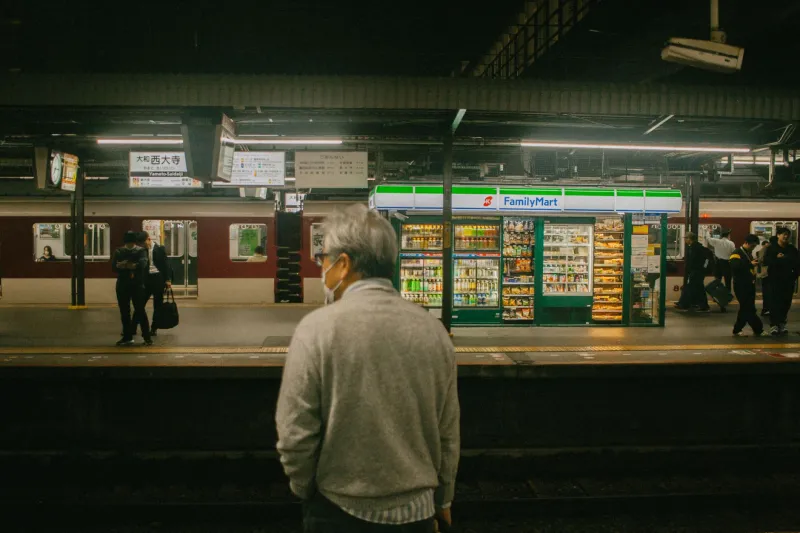
The train, of course, remains Japanese cinema's most resonant setting for this particular inquiry. The daily commute is not merely a backdrop in these films—it is a condition of being, a recurring exposure to the gap between individual interiority and collective anonymity.
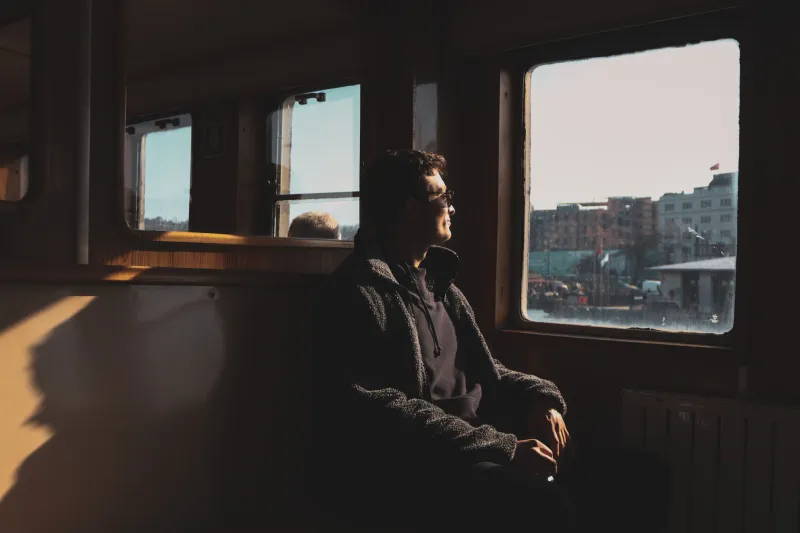
In film after film from Japanese studios, characters board trains carrying interior worlds that the people seated inches away will never access. A woman processes a diagnosis in silence as a businessman scrolls through his phone beside her. A teenager rehearses a confession he will never deliver as the city blurs past the window. The train does not judge these moments. It simply carries them forward, indifferent and efficient, toward stations that will scatter everyone back into their separate lives.
This is the specific psychological texture that American audiences are encountering in increasing numbers—and finding, often to their surprise, that it maps almost exactly onto their own experience. The loneliness of a Los Angeles freeway at rush hour and the loneliness of an Osaka commuter train are not identical, but they rhyme in ways that no amount of cultural distance can obscure.
What Therapy Gets Wrong, and Cinema Gets Right
The American therapeutic model, broadly speaking, treats loneliness as a problem to be solved. Identify the source, develop coping strategies, build connections, repeat. This is not without value. But it tends to treat the condition as an aberration—something that has gone wrong and must be corrected.
Japanese cinema, by contrast, tends to treat loneliness as a fundamental feature of modern consciousness. It is not a malfunction. It is a weather system. The question is not how to eliminate it but how to live honestly within it—how to recognize it in others, how to create the small, fragile bridges that briefly span it, how to find meaning in the attempt even when the attempt falls short.
This is a profoundly different proposition, and it is one that American audiences appear to be ready to receive. The success of Japanese films in American art-house theaters and on streaming platforms over the past several years is not simply a matter of cinematic quality, though the quality is undeniable. It is a matter of emotional accuracy. These films are telling American viewers something true about their own lives that their own culture has been reluctant to say plainly.
The Silver Screen as Mirror
At Hankyu Densha Cinema, we have long believed that the encounter between American audiences and Japanese film is not a one-way transmission—not simply Japan exporting its cinematic traditions to a receptive Western market. It is a conversation, and like the best conversations in Hamaguchi's films, it is one that reveals both parties to themselves.
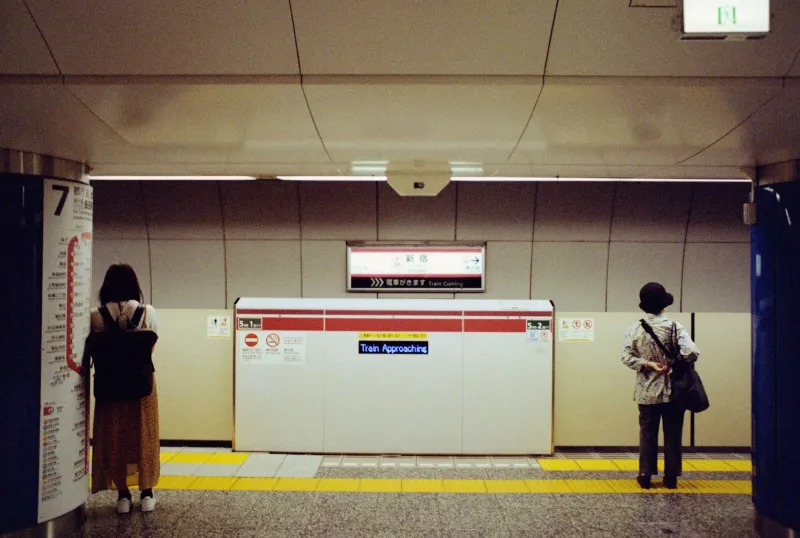
When an American viewer sits in a darkened theater and watches a Japanese character stand on a crowded platform, surrounded by thousands of people and utterly alone, something is recognized. Not borrowed, not appropriated—recognized. The sensation of being unseen in plain sight is not culturally specific. It is, increasingly, the defining condition of urban life in the twenty-first century.
Japanese cinema did not invent this condition. But it has been watching it longer, rendering it with greater patience, and refusing to offer false comfort in place of genuine understanding. That, in the end, may be what distinguishes it from both the self-help shelf and the Hollywood blockbuster: a willingness to sit with the silence, to let the train carry the weight, and to trust that the audience is strong enough to bear what they see reflected back at them.