Nobody at the Center: How Japanese Ensemble Cinema Challenges Everything American Storytelling Holds Sacred
Every screenwriting manual published in the United States in the last fifty years contains some version of the same instruction: know your protagonist. Know what they want, what stands in their way, what they must sacrifice to become who they need to be. The hero's journey—Joseph Campbell's framework, George Lucas's application of it, Hollywood's institutionalization of it—has so thoroughly shaped American narrative expectations that most viewers carry it unconsciously, like grammar. They look for the main character the way they look for a subject in a sentence.
Japanese ensemble cinema does not give them one. And the results, for viewers willing to release that expectation, are among the most quietly transformative experiences contemporary film has to offer.
The Architecture of Equal Weight
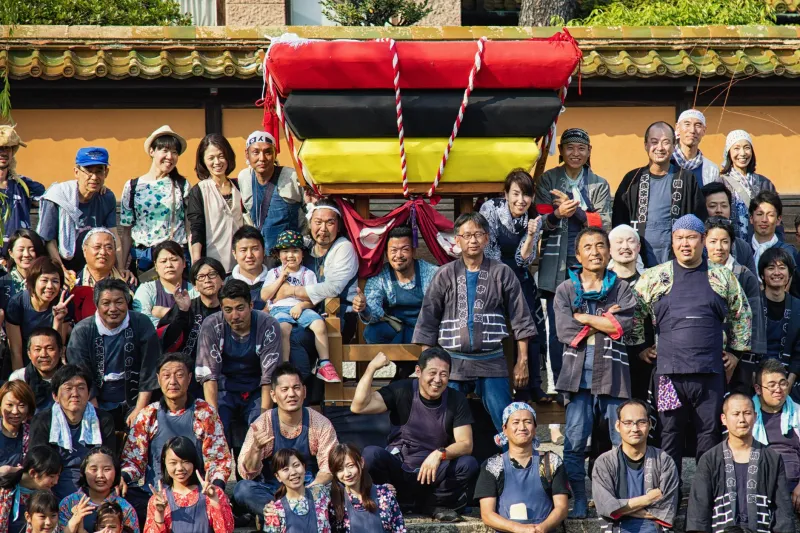
The structural distinction is worth establishing precisely, because it is often misunderstood. Japanese ensemble films are not simply films with large casts, nor are they films where multiple characters take turns being the protagonist. They are films in which the narrative weight—the emotional gravity, the screen time, the moral complexity—is distributed without a clear hierarchy. No single figure is the lens through which the story is intended to be understood.
This is a more radical departure from Western convention than it initially appears. Even Hollywood ensemble films—Crash, Magnolia, Short Cuts—tend to operate with protagonists who are simply temporarily displaced from the center of the frame. The architecture of those films still assumes that certain characters matter more than others. Certain storylines carry more weight. The audience is guided toward particular emotional allegiances.
In Kore-eda Hirokazu's Shoplifters (2018), every member of the found family at the story's heart is granted equal moral complexity and equal narrative space. The film does not ask viewers to root for one of them. It asks viewers to hold all of them simultaneously—their contradictions, their warmth, their compromises—without the organizing comfort of a single perspective. This is genuinely difficult, and it is also, for many viewers, genuinely revelatory.
What Cultural Values Sound Like on Screen
The ensemble structure in Japanese cinema is not a stylistic accident. It reflects values that are deeply embedded in Japanese social and cultural life—a prioritization of collective identity over individual distinction, an understanding of selfhood as fundamentally relational rather than autonomous, and a narrative ethics that resists the reduction of complex human systems to a single consciousness.
This does not mean Japanese cinema is without individuals. It means that individuals in these films are understood to exist within webs of obligation, affection, history, and circumstance that cannot be subordinated to any one person's arc without distorting the truth of the story. The ensemble structure is, at its core, an argument about what reality looks like.
Miwa Nishikawa's Dear Doctor (2009) exemplifies this. The film circles its central figure without ever fully inhabiting him, instead building its portrait through the perspectives of everyone around him—colleagues, patients, family members who each hold a different piece of who he is. The viewer assembles a human being from fragments, the way we actually come to know people in life. No single perspective is authoritative. The truth, if it exists at all, lives in the aggregate.
The Fatigue With the Singular Hero
American audiences are arriving at Japanese ensemble cinema from a particular cultural moment. The superhero industrial complex—which has dominated Hollywood for fifteen years—has produced a protagonist monoculture so thorough that its alternatives register as genuinely exotic. The singular hero, endlessly rebooted and relaunched, has become not just a formula but a worldview: the belief that history is made by exceptional individuals, that the right person with the right qualities can resolve any crisis, that the story of a group is ultimately the story of whoever among them is most special.
For a growing number of viewers, this worldview has begun to feel not just artistically limiting but philosophically dishonest. The problems that define contemporary American life—economic precarity, institutional failure, social fragmentation—are not problems that yield to exceptional individuals. They are collective problems, and they require collective ways of seeing.
Japanese ensemble cinema offers exactly that. In Yoshitaro Nomura's earlier work and in the contemporary films of directors like Sion Sono and Naomi Kawase, the story belongs to everyone in it. The cleaning woman and the executive occupy the same narrative plane. The child's perspective carries as much weight as the adult's. This is not sentimentality—it is a structural commitment to the proposition that all lives are equally worth narrating.
Learning to Watch Without a Guide
The practical challenge for American viewers is real and worth acknowledging. Without a designated protagonist, the instinct to identify—to select one character and follow them as a surrogate through the story—is frustrated. Some viewers experience this as disorientation. Others experience it, after a period of adjustment, as liberation.
The liberation comes from what the ensemble structure ultimately offers: a model of attention that can hold more than one thing at once. Films that distribute their weight evenly train viewers to resist the simplifying impulse, to stay with complexity rather than resolve it into a single line of feeling. This is, arguably, exactly the kind of perceptual training that contemporary life demands and contemporary entertainment rarely provides.
Japanese ensemble cinema is not easy. It does not offer the satisfactions of the hero's journey—the clear stakes, the earned triumph, the cathartic resolution. What it offers instead is something rarer and, in the current moment, more necessary: a story in which everyone, without exception, is the point.