Frames Without Borders: How Japanese Manga Composition Is Quietly Reshaping the Hollywood Camera Lens
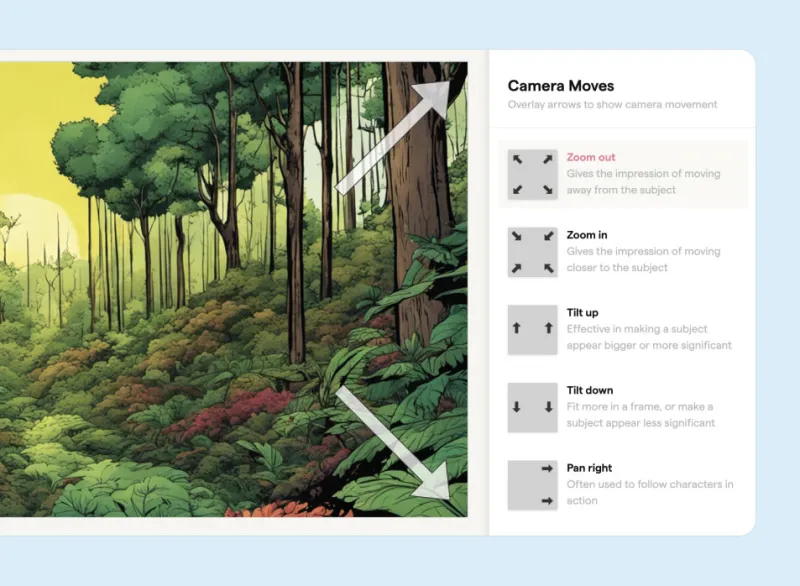
Photo: manga storyboard panels alongside film cinematography camera setup studio, via images.ctfassets.net
There is a moment in many great Japanese manga panels where nothing happens at all. A character stands still. A street sits empty. The sky occupies two-thirds of the frame. And yet, somehow, that silence carries the full emotional weight of the scene. It is a principle so deeply embedded in Japanese visual culture that it has a name—ma, the meaningful pause between things—and it is now finding its way into some of the most visually ambitious productions coming out of Hollywood.
For decades, American cinema prided itself on momentum. Cuts were fast, frames were full, and action was constant. But something has shifted. A new generation of cinematographers and directors, many of whom grew up reading manga or studying Japanese cinema, are deliberately slowing down, emptying out, and restructuring the visual grammar of their films. The influence is subtle in some cases, seismic in others—and it is well worth examining closely.
The Architecture of the Manga Panel
To understand what manga brings to cinema, one must first appreciate what makes manga composition so distinct. Unlike Western comics, which traditionally filled panels with dense linework and saturated action, manga artists such as Osamu Tezuka, Naoki Urasawa, and Kentaro Miura developed a visual language built on contrast. A chaotic action sequence might be followed by a single, wordless panel of a character's hand resting on a table. The juxtaposition is not incidental—it is architectural.
This sequential storytelling logic, the rhythm of tension and release played out across a page, maps surprisingly well onto cinematic language. Editors and directors who understand manga intuitively grasp that pacing is not merely about the speed of cuts, but about the deliberate arrangement of emotional beats across time.
Cinematographer Roger Deakins, in various interviews over the years, has spoken about the influence of still photography and graphic art on his framing instincts. While he has not specifically cited manga, the compositional philosophy he describes—prioritizing the emotional truth of an image over its informational content—aligns closely with what manga masters have practiced for generations.
Hollywood Films That Speak in Japanese Visual Dialects
Several recent American productions have drawn noticeable inspiration from Japanese visual storytelling, even when their subject matter has nothing to do with Japan.
The Batman (2022), directed by Matt Reeves and shot by Greig Fraser, made extensive use of oppressive shadow and deliberate negative space. Characters frequently appeared small against vast, dark environments—a compositional choice that would feel immediately familiar to readers of Tsutomu Nihei's architectural manga series Blame! or the sprawling cityscapes of Akira. Fraser, who won the Academy Award for Best Cinematography for Dune that same year, has spoken openly about the influence of Japanese aesthetics on his approach to large-scale visual storytelling.
Dune itself is a compelling case study. Director Denis Villeneuve and Fraser constructed a film in which empty desert vistas hold as much narrative weight as dialogue scenes. The stillness of those compositions—the way a single figure against an infinite horizon communicates both insignificance and destiny—echoes the visual philosophy found throughout Japanese cinema and manga alike. Villeneuve has long cited Japanese filmmaker Akira Kurosawa as a foundational influence, and that lineage is visible in every carefully considered frame.
Even within superhero cinema, the fingerprints of manga composition are becoming more legible. The Russo Brothers, speaking about their work on the Avengers films, acknowledged studying how manga panels guide a reader's eye through a page when planning complex ensemble action sequences. The challenge of directing the viewer's attention across a crowded, kinetic frame is one that manga artists solved decades ago.
The Principle of Negative Space as Narrative Tool
Perhaps the most transferable concept from manga to cinema is the strategic use of negative space—the deliberate emptiness that surrounds a subject and amplifies its emotional resonance. In manga, this might manifest as a character isolated in a white void at a moment of psychological crisis. On screen, it translates to wide shots that dwarf human subjects, or to scenes where the camera lingers on an empty room after a character has departed.
American directors have historically been reluctant to trust emptiness. Studio notes famously push for more coverage, more information, more content in every frame. But the commercial and critical success of films that embrace restraint—from Parasite (a South Korean production that deeply influenced American filmmakers) to the quieter moments of Arrival—has begun to shift that calculus.
Cinematographer Bradford Young, known for his work on Arrival and Selma, has described his compositional approach in terms that resonate strongly with Japanese visual philosophy. He speaks of frames as emotional containers, of the responsibility to leave room for the audience's imagination to complete what the image begins. That is, in essence, the lesson manga has been teaching for over a century.
Why American Audiences Are Ready for This Language
There is a generational dimension to this shift that deserves acknowledgment. Millions of American viewers under the age of forty grew up reading manga, watching anime, and playing Japanese video games. They have internalized a visual grammar that their parents' generation largely did not encounter. When a Hollywood film employs manga-influenced composition, it does not feel foreign to these audiences—it feels familiar, even comforting.
Streaming platforms have also played a role. The global availability of anime series and Japanese films on platforms such as Netflix and Crunchyroll has dramatically expanded the visual literacy of American viewers. A teenager in Ohio who has watched Neon Genesis Evangelion or Vinland Saga has developed an appetite for the kind of deliberate, emotionally weighted visual storytelling that manga pioneered.
Hollywood, always attuned to where audiences are heading, is responding accordingly.
The Road Ahead
The conversation between Japanese visual tradition and American cinema is not new—Kurosawa's influence on George Lucas and Sergio Leone is well documented, and the debt has long been acknowledged. What is new is the directness of the manga pipeline into contemporary production design and cinematography.
As studios greenlight more adaptations of manga properties and as a generation of manga-literate filmmakers ascends to positions of creative authority in Hollywood, that influence will only deepen. The frame, once a window through which audiences passively observed, is becoming something richer: a composed space where silence, proportion, and deliberate emptiness carry as much meaning as anything placed within them.
For cinema enthusiasts attentive to these shifts, the coming decade promises to be a genuinely exciting period of cross-cultural visual synthesis—one in which the lessons of the manga page continue to quietly, powerfully reshape the silver screen.