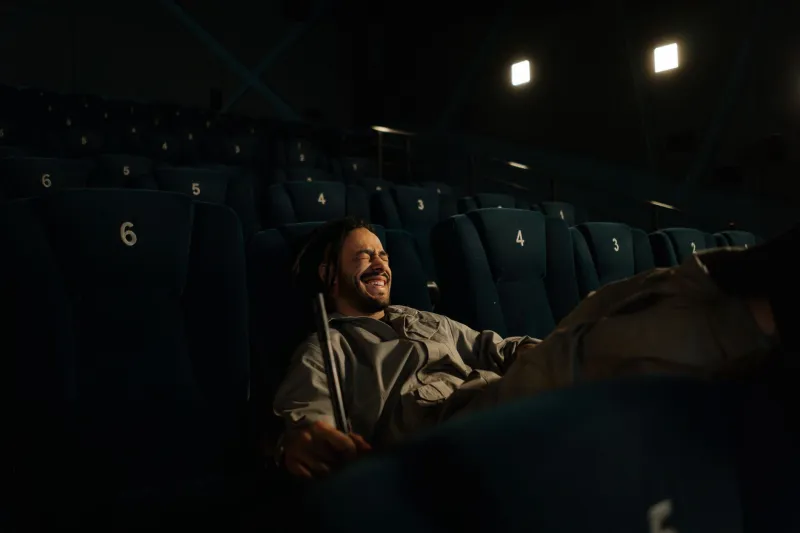
Held Still: Why Japanese Cinema's Motionless Camera Is the Most Radical Frame in the World Right Now
Let us be direct about what we are arguing here: the static shot in contemporary Japanese cinema is not a stylistic preference or a cultural quirk or an artifact of modest production budgets. It is a philosophical position. And in an entertainment landscape defined by kinetic excess, it has become—improbably, defiantly—one of the most discussed aesthetic choices in global film culture.
The conversation is happening largely among younger viewers. On film forums, in university screening rooms, in the comment sections beneath YouTube essays about cinema, a particular vocabulary has emerged. Japanese minimalist filmmaking is being called, with evident affection and a degree of pointed irony, anti-Marvel. The phrase is blunt, but it is not wrong.
What the Camera Refuses
To understand why the static frame has become such a charged topic, it helps to map what it refuses. Contemporary Hollywood—and, increasingly, global streaming content—operates on the assumption that the camera must constantly justify its presence through movement. It pushes in during emotional moments. It swoops during action. It cuts, on average, every two to four seconds in mainstream releases, a rhythm calibrated to hold an attention span that has been systematically shortened by the very devices used to watch these films.
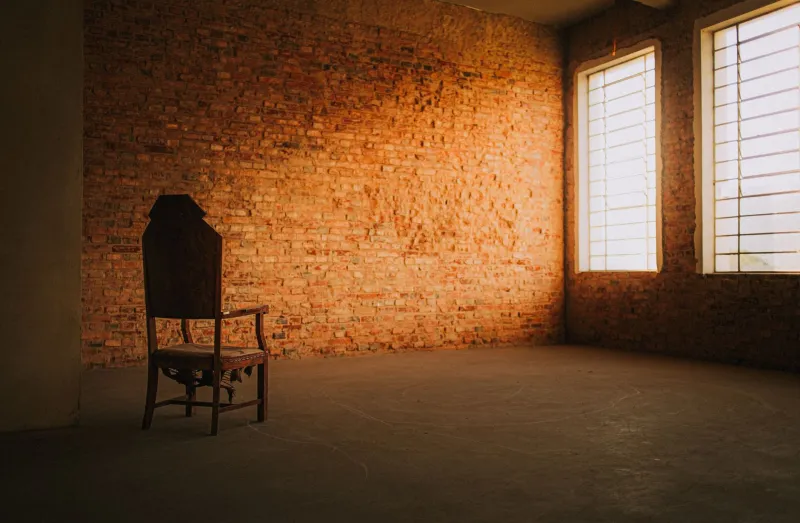
Japanese minimalist directors—Ryusuke Hamaguchi, Hirokazu Kore-eda, Naomi Kawase, Koji Fukada among them—do something that, described plainly, sounds almost aggressive: they put the camera down and leave it there. A conversation unfolds across several minutes in a single unbroken frame. A character walks away from the lens until they are small and then smaller. A room sits empty after someone has left it, and the film simply waits, without apology, for whatever comes next.
The effect on a viewer conditioned to Marvel's visual grammar is not subtle. It can produce genuine discomfort before it produces anything else. That discomfort, many younger viewers are now arguing, is precisely the point.
Presence as Provocation
Hamaguchi's Drive My Car (2021) became the film that most prominently introduced this conversation to American audiences, winning the Academy Award for Best International Feature and generating a level of critical discourse unusual for a three-hour Japanese drama. Much of that discourse, eventually, circled back to the camera.
Hamaguchi shoots dialogue—sometimes long, complex, emotionally layered dialogue—in sustained takes where the frame does not move and does not cut away to reaction shots. The actors are simply there, speaking, being watched. It is an approach that sounds straightforward and feels, in practice, almost confrontational. Viewers cannot skim it. The film will not help them multitask. It demands a quality of attention that most contemporary media has quietly stopped requiring.
For Gen Z viewers in particular—a cohort that has grown up with the most aggressive attention-capture technology in human history—this demand registers as something unexpected: respect. The film trusts them to stay. It does not bribe them with stimulation. This, several prominent young film critics have written, is what makes it feel radical.
The Philosophy Behind the Frame
The stillness in Japanese minimalist cinema is not accidental, and it is not simply aesthetic. It reflects a set of attitudes toward time, perception, and the ethics of looking that have deep roots in Japanese artistic traditions—from the held moments of Noh theater to the compositional patience of woodblock print—even as contemporary directors apply them to distinctly modern subjects.
Kawase, in particular, has spoken extensively about the camera as a witness rather than a narrator. Her framing does not interpret events for the viewer; it presents them. The responsibility of meaning-making is transferred to the audience. This is a fundamentally different contract than Hollywood offers, and it produces a fundamentally different viewing experience—one that some find frustrating and others find, once they have adjusted, deeply freeing.
The connection to broader cultural attitudes toward technology is worth examining. Japan has produced some of the world's most searching artistic responses to technological acceleration—literature, design, and cinema that take seriously the question of what presence means when everything is optimized for speed and efficiency. The static frame is, among other things, an answer to that question. It says: this is what it looks like to not be in a hurry.
A Generational Statement
The anti-Marvel label, for all its reductiveness, captures something real. It is not primarily a critique of superhero films—it is a statement about a mode of experiencing the world. Young viewers who are reaching for Kore-eda and Hamaguchi are not simply choosing quieter entertainment. They are, many of them, actively seeking a different relationship with their own attention.
This is the industry story that deserves more serious examination. Japanese minimalist cinema is not succeeding in the American market despite its stillness. It is succeeding, at least in part, because of it. Distributors and streaming platforms would do well to understand this distinction before concluding that the lesson is simply to acquire more subtitled content.
The camera that refuses to move is making an argument. Audiences are listening—or rather, watching. Slowly, carefully, without looking away. That, in the current landscape, is the most revolutionary act cinema has to offer.